Source recyclable paper board cake box for Food Gifts Cosmetics
Compare 30 listings for the recyclable paper board cake box from Chinese direct factories. Buyers can evaluate customization options, layer counts, and printing methods for food, gifts, and cosmetic applications.
Key considerations
Products List


Comprehensive Sourcing Guide
Strategic Sourcing Guide for Recyclable Paper Board Cake Boxes
Understanding Material Composition and Structural Integrity
When sourcing recyclable paper board cake boxes, the primary focus must be on the specific material composition that ensures both sustainability and structural durability. The available market data indicates a diverse range of material options, with "Paper" and "Cardboard Paper" serving as the foundational elements. For applications requiring higher rigidity, such as transporting delicate desserts, specifications often cite "800GSM Cardboard" paired with "120GSM Textured Paper." This combination suggests a layered approach where the structural core provides the necessary strength to support the weight of the cake, while the outer layer offers a premium aesthetic finish.
The product attributes further reveal that these boxes are often constructed using "Laminated Material," which can enhance moisture resistance—a critical factor for food packaging. The layering process is highly customizable, with observed specifications ranging from "1/2/3/4 Layers." This variability allows buyers to tailor the box's thickness and rigidity to the specific weight and fragility of the product being shipped. For instance, a single-layer construction might suffice for lightweight pastries, whereas a four-layer laminate would be necessary for heavier, multi-tiered cakes. The "Paper Type" is frequently identified as "Cardboard," but the inclusion of "Paper and Pet" in some listings suggests that synthetic paper blends may also be available for specific high-performance requirements.
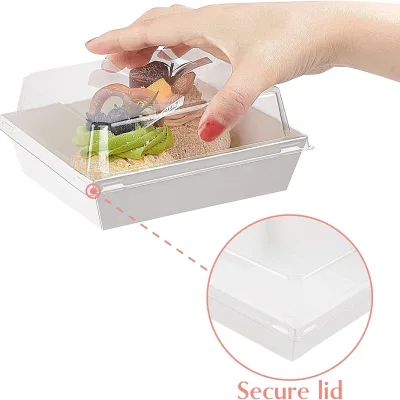
Structural design is equally vital. The standard shape observed is "Rectangle," optimized for efficient stacking and storage. The "Box Type" is predominantly described as a "Top and Bottom Box" or a "Food Portable Carton," designed to enclose the product securely. The dimensions vary significantly based on the intended use, with standard models ranging from "4 inch" to "6 inch" in specific product lines, while other listings offer fully "Customized" sizes. Some standardized dimensions are noted as "300230110mm," providing a baseline for buyers to compare against their specific product dimensions. The "Single Package Size" of "20X10X0.5 Cm" indicates that flat packing is a common feature, which is essential for minimizing shipping volume and costs before the boxes are assembled at the destination.
Technical Specifications and Customization Capabilities
The technical specifications of recyclable paper board cake boxes are defined by a high degree of customization, allowing buyers to align the packaging with their brand identity and functional needs. The "prod_model" field in the data shows entries ranging from specific inch measurements like "6 inch" and "4 inch" to generic terms like "jialan" and "Customize." This indicates that suppliers offer both pre-defined standard sizes and bespoke manufacturing capabilities. The "prod_standard" confirms that suppliers can "Accept customized any size," ensuring that the packaging fits unique cake dimensions without requiring expensive custom molds for every order.
Color and printing options are significant technical differentiators. The observed color palette includes "White, Pink, Blue, Orange," and the data explicitly states that "Custom Color Accepted/Pantone" is available. This flexibility is crucial for branding, allowing companies to match their packaging to specific product lines or seasonal themes. The printing process is primarily "Offset Printing," which is known for high-quality, consistent image reproduction. Additional surface handling techniques include "Varnishing," which adds a protective and aesthetic layer to the printed design. The "Printing Page" is often "Two-Sided," maximizing the branding real estate on the box.
Furthermore, the "Logo Printing" capability is a standard feature, with options for "Customer Logo" integration. This ensures that the packaging serves as a marketing tool, reinforcing brand recognition. The "Customization" attribute is marked as "Available" across the board, and "Custom Order" is explicitly "Accept"ed. This suggests that buyers can request specific alterations to the box structure, such as window cutouts or specific closure mechanisms, provided they meet the supplier's production capabilities. The "Industrial Use" is listed as "Beauty Packaging" and "Food," indicating that the design standards are versatile enough to meet the aesthetic and safety requirements of multiple sectors, though the primary focus for this guide remains on food applications.
Compliance, Certification, and Safety Standards
Ensuring that recyclable paper board cake boxes meet international safety and environmental standards is a critical step in the procurement process. The data highlights several key certifications that buyers should verify, including "BSCI," "Disney," "FSC," and "ISO9001." The presence of "FSC" (Forest Stewardship Council) is particularly relevant for buyers prioritizing sustainability, as it certifies that the paper board is sourced from responsibly managed forests. However, it is important to note that while FSC is listed in the background context, buyers must confirm the specific certification status of the supplier they engage with, as not every listed product may automatically carry this certification.
For food contact applications, the "HS" code "3924100000" identifies the product category, which generally encompasses plastic tableware and kitchenware, but in the context of paper board, it often relates to the classification of the finished packaging material. Buyers must ensure that the materials used, such as the "800GSM Cardboard" or "Laminated Material," are compliant with local food safety regulations. The "Application" field lists "Food," "Household," "Health Care Products," and "Cosmetic," which implies that the materials are suitable for direct or indirect food contact.
The "Audit" standard mentioned includes "BSCI" (Business Social Compliance Initiative), which focuses on the social responsibility of the manufacturing process. This is a key indicator for buyers concerned with ethical sourcing and labor practices. The "ISO9001" standard points to a quality management system, suggesting that the supplier has established procedures to maintain consistent product quality. When evaluating suppliers, buyers should request valid certificates for these standards rather than relying solely on the listing descriptions. The "Feature" of "Recycled Materials" is also a key compliance indicator, aligning with modern environmental regulations and corporate sustainability goals. Buyers should verify the percentage of recycled content and ensure that the recycling process does not compromise the food safety of the packaging.
Cost Drivers and Minimum Order Quantities
The economics of sourcing recyclable paper board cake boxes are influenced by several variables, including material costs, customization levels, and order volume. The observed "MOQ" (Minimum Order Quantity) ranges widely, from as low as "2" units to as high as "30,000" units. Specific listings indicate an "MOQ" of "500PCS for Custom Box" or "1000" for other variants. This variance suggests that standard, off-the-shelf boxes may have lower entry barriers, while fully customized designs with specific logos, colors, and dimensions require higher volume commitments to justify the setup costs.
The "Selling Units" are typically listed as "Single Item," which implies that pricing is often calculated per unit based on the total order volume. The "Weight" of the product is generally low, with observations showing "<0.5 kg" and a specific "Single Gross Weight" of "0.030kg." This low weight is a significant cost driver in favor of the buyer, as it reduces shipping expenses, particularly for air freight. However, the "prod_packing" method, which can be "Carton Box," "Flat Packing," or "Paper Box Packing," also impacts logistics costs. Flat packing is generally more cost-effective for shipping as it maximizes container space, whereas pre-assembled boxes occupy more volume.
The "Observed listed price range" in USD is "0.01-50," reflecting the vast difference between basic, small-scale boxes and large, highly customized, or premium-laminated units. Buyers should be aware that the lower end of this range likely corresponds to simple, standard-sized boxes with minimal printing, while the higher end includes complex multi-layer structures, custom colors, and premium finishes like varnishing. The "Supplier Type" is identified as "Direct Factory," which often implies better pricing compared to trading companies, as it eliminates middleman markups. However, buyers must verify the factory's capacity to handle their specific order size and timeline.
Typical Applications and Usage Scenarios
Recyclable paper board cake boxes are designed for a broad spectrum of applications, extending beyond simple dessert transport. The "Usage" field lists "Arts and Crafts," "Electronic Products," "Jewelry," "Garment & Shoes," "Greeting Cards," "Letters," "Gifts," "Cosmetic," and "Health Care Products." This versatility highlights the box's ability to serve as a premium packaging solution for various retail sectors. However, the primary focus for this guide is on the "Food" and "Gifts" applications, where the box's structural integrity and aesthetic appeal are paramount.
In the food sector, the "Industrial Use" is explicitly noted as "Food" and "Beauty Packaging." The "Product Name" often includes terms like "Cake Bread Dessert Portable Carton," indicating a specialized design for bakery items. These boxes are engineered to protect delicate items from crushing and to maintain freshness. The "Shape" being "Rectangle" makes them ideal for standard cake sizes, while the "Top and Bottom Box" design ensures secure closure. The "Application" also includes "Household" and "Electronic," suggesting that the same packaging lines might be used for gift sets containing electronics or household items, provided the food safety requirements are not the primary concern.
The "Color" options, including "White, Pink, Blue, Orange," and the ability to accept "Custom Color," allow these boxes to be tailored for specific occasions. For example, pink and orange might be used for children's birthday cakes, while white and blue might suit elegant wedding cakes. The "Logo Printing" feature enables bakeries and gift shops to brand their products effectively, turning the packaging into a marketing asset. The "Feature" of "Recycled Materials" appeals to environmentally conscious consumers, making these boxes a strategic choice for brands that wish to communicate their commitment to sustainability.
Supplier Evaluation and Quality Control Protocols
Selecting the right supplier is critical to ensuring the quality and reliability of recyclable paper board cake boxes. The data identifies the "Supplier Type" as "Direct Factory," which is generally a positive indicator for quality control and cost efficiency. Buyers should prioritize suppliers who can demonstrate a robust "ISO9001" quality management system. This certification suggests that the factory has standardized processes for production, inspection, and continuous improvement. Additionally, the "Audit" standards like "BSCI" and "Disney" indicate that the supplier adheres to strict social and ethical guidelines, which is important for maintaining a reputable supply chain.
Quality control should focus on the material consistency and printing accuracy. Buyers must verify that the "Material" matches the specified "800GSM Cardboard" or "120GSM Textured Paper" to ensure the box does not collapse under the weight of the cake. The "Layer" count should be strictly monitored to prevent deviations that could affect structural integrity. The "Surface Handling" process, specifically "Offset Printing" and "Varnishing," should be inspected for color accuracy and durability. The "Printing Page" should be checked to ensure that two-sided printing is aligned correctly and that the "Customer Logo" is printed with high fidelity.
The "prod_packing" method is another area for quality control. "Flat Packing" is preferred for shipping efficiency, but the boxes must be flat-packed without creases or damage that could affect assembly. The "Single Package Size" and "Single Gross Weight" should be verified to ensure they match the supplier's specifications, as discrepancies can lead to unexpected shipping costs or customs issues. Buyers should also request samples to test the "Recycled Materials" claim and ensure that the packaging meets the necessary food safety standards. Finally, the "Shipping" method, whether "by Courier or by Sea," should be discussed to ensure that the packaging can withstand the chosen logistics route without damage.
Long-Term Procurement and Sustainability Considerations
For long-term procurement strategies, buyers should prioritize suppliers who offer scalable solutions and consistent quality. The "Custom Order" acceptance and "Customization" availability suggest that suppliers are capable of adapting to changing market needs and product lines. This flexibility is essential for businesses that plan to expand their product range or introduce new cake varieties. The "Standard" of "Accept customized any size" ensures that the packaging can evolve alongside the product, preventing the need for frequent supplier changes.
Sustainability is a growing priority in the packaging industry, and the "Feature" of "Recycled Materials" is a key selling point. Buyers should seek suppliers who can provide transparent information about the source of their recycled materials and the percentage of post-consumer waste used. The "FSC" certification, while listed in the background, is a strong indicator of sustainable forestry practices. Buyers should verify the validity of this certification and ensure that the supplier's supply chain is traceable. The "HS" code and "Application" data suggest that the products are compliant with international trade regulations, but buyers should stay updated on any changes in environmental laws that might affect the import or export of recycled packaging.
The "MOQ" flexibility, ranging from "2" to "30,000," allows buyers to manage inventory risks effectively. For new product launches, a lower MOQ can reduce the financial burden, while established brands can leverage higher volumes to secure better pricing. The "Weight" and "Packing" specifications indicate that the packaging is designed for efficient logistics, which reduces the carbon footprint associated with transportation. By choosing suppliers who offer "Flat Packing" and "Direct Factory" models, buyers can further optimize their supply chain for cost and environmental impact. Ultimately, the goal is to build a partnership with a supplier who shares the buyer's commitment to quality, sustainability, and innovation in the packaging industry.
FAQs
What materials are used for recyclable paper board cake boxes?
These boxes are primarily made from Cardboard Paper and Laminated Material. Specifications often include 800GSM Cardboard paired with 120GSM Textured Paper for rigidity. Some listings also note Paper and Pet blends for specific high-performance requirements.
Can I customize the size and color of these cake boxes?
Yes, customization is available for both size and color. Suppliers accept custom orders for any size, including specific dimensions like 300*230*110mm. Custom colors and Pantone matching are also accepted alongside standard options like White, Pink, Blue, and Orange.
What is the minimum order quantity for custom cake boxes?
The minimum order quantity varies by supplier and product type. Specific listings indicate an MOQ of 500 pieces for custom boxes, while other variants may require 1000 units. General observed ranges extend from 2 to 30,000 units depending on the configuration.
Which certifications do suppliers of these boxes typically hold?
Suppliers often hold audits including BSCI, Disney, FSC, and ISO9001. These certifications cover social compliance, brand standards, forest management, and quality management systems. Buyers should verify specific certificate validity as not every listed product automatically carries all certifications.
How are these boxes packed for shipping to reduce costs?
Boxes are commonly shipped in flat packing to minimize volume and shipping costs. They are also available in carton box packing or paper box packing. The single package size is often around 20x10x0.5 cm, allowing efficient stacking and transport.
What printing methods are used for logos on these boxes?
Offset printing is the primary method used for high-quality image reproduction. Surface handling often includes varnishing for protection and aesthetics. Two-sided printing is available, allowing customer logos to be printed on multiple sides for maximum branding impact.